“Digital transformation begins with a small step that breaks a pattern”
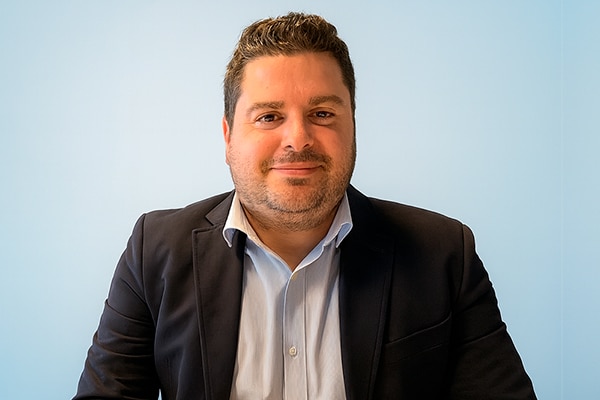
Fran Vázquez is a leading figure in digital transformation applied to industry. A consultant and strategist with over two decades of experience, he specializes in online positioning, digital analytics, and data management, which has led him to lead and participate in strategic projects both nationally and internationally for companies such as INDRA, Vodafone, Tuenti, and Ebro Foods, as well as in digital communication initiatives for public institutions like the Regional Government of Andalusia and the Regional Government of Extremadura.
He also has extensive experience as a trainer, is a regular contributor to the media, and an active speaker at professional conventions. We had the opportunity to hear him speak at the latest Techsolids Conference, held on November 27th in Pinto (Madrid).
But undoubtedly, his greatest strength lies in his ability to translate technology into clear business language. Thus, his work goes beyond training: he helps and guides managers and teams to see digital technology as a strategic lever for improving processes and opening new business opportunities.
You’ve spent over two decades helping companies understand and leverage digital technology. Let’s look back now. What do you think has changed more in these years: the technology itself or the mindset of those who lead these companies?
I believe that technology is evolving at an impressive speed, but what has truly changed, and continues to change, is the mindset. Twenty years ago, digital was something that “had to be kept an eye on,” and today it’s a condition for survival. But the interesting thing is that technology often advances faster than people, and the real transformation occurs when executives stop seeing digital as an expense, a band-aid, or a fad, and start seeing it as a strategic lever to improve processes, attract talent, or open up new business models. It’s about a mental shift that, although slow, is the true engine of change.
Many describe you as someone capable of “translating technology” into the language of business. When did you discover this ability, this skill, so to speak?
I discovered it out of necessity rather than by design. I realized that if we wanted technology to deliver real value, it had to be understood by decision-makers, and talking about technical jargon is pointless. I started explaining complex concepts with everyday examples, real-world chaos, and I saw that it worked. And I saw that people were beginning to understand. At that moment, when you see the eyes of those listening light up, it becomes addictive. And since then, I’ve tried to connect both worlds.
In your experience, what surprises you most—for better or for worse—about the industrial sector when it faces digitalization—whether we’re talking about large corporations or SMEs?
For the better, the capacity for adaptation when they see that something is useful. Industry is very pragmatic, and if it works, they quickly adopt these solutions. And for the worse, the barrier of initial resistance. There are many industrial companies that wait to have everything perfect before taking the digital leap, and that’s a significant obstacle. Sometimes, digitalization doesn’t require perfection; it requires implementation. Sometimes taking a small step can change very important dynamics within companies.
You often say that digital transformation isn’t just about installing good software, but about changing the way we work. Is the industrial sector in Spain achieving this?
Important steps are being taken, but there’s still a long way to go. Many companies still think that digitizing is simply buying a tool, and that’s really just the beginning. True transformation happens when processes are rethought, old paradigms are broken, and teams see it as a means, not an end. When that happens, productivity starts to increase and the business begins to scale.
In fact, you say that digitalization is, above all, a change in attitude. What attitude would you like to see more of in Spanish industry?
I’d like to see more curiosity. That is, more courage. A digital attitude isn’t about knowing how to program; it’s about being willing to review processes, to leave behind habits that no longer work. In the end, a curious organization learns much more than an expert one. And that’s evident in every one of the organizations I’ve had the opportunity to advise or work with.
Focusing on our market, fluid processing technology, what mistakes do you usually see in companies in the sector when they try to “jump on the digital bandwagon”?
There are three fairly common mistakes. The first is thinking that everything is digital marketing, and it’s not. Digitalization starts with internal processes, with data management. The second mistake is wanting to digitize without reviewing processes. If the process is already flawed, digitizing it will only make it faster, but the problem won’t disappear. And the last mistake is copying what others are doing without analyzing whether it works for our reality and needs. Each company has to find its own path to digitalization, not someone else’s.
Many industrial SMEs feel that AI is “someone else’s thing.” How do you break through that mental block, that barrier you mentioned earlier? In other words, where do you start applying AI without failing in the attempt?
With real-world examples, not promises. When an SME sees that it can predict failures, reduce costs, automate repetitive tasks, or improve customer service with AI, the perception changes on its own. Complex algorithms and large investments aren’t necessary. You start small, see the rapid impact, and that first victory generates complete confidence.
Based on your experience as a collaborator with Techsolids, where you help boost training and digitalization projects, what needs are you identifying in the sector, and what solutions have already been put forward?
At the moment, I see three needs: training, that is, understanding what the technology is for; process standardization, organizing information before digitizing; And the support—someone to help measure progress, identify critical points, etc.—is already being promoted at Techsolids through this type of specialized training, this advice for digitization projects, and forums for sharing best practices. And this collaboration is significantly accelerating learning.
The industry is increasingly talking about data, automation, and generative AI. What trends will truly impact fluid management in the coming years?
I see three clear trends. First, advanced monitoring and preventative maintenance. The combination of sensors and analytics allows us to reduce downtime and potential failures and incidents. Second, the use of digital twins. Being able to run real-time simulations to optimize processes and anticipate problems is a good starting point for increasing the operational efficiency of companies involved in fluid management and the solids industry. And third, everything related to AI applied to operational decision-making: adjusting parameters, detecting anomalies, or recommending certain configurations without human intervention. I believe these are among the most important trends. And all of this isn’t the future; it’s already happening, and the important thing is to integrate and adapt it to each digitalization process that a company in the sector requires.
Are we ready for an industrial sector that makes data-driven decisions? Or is there still work to be done to ensure that the corporate culture keeps pace?
I think technically, yes, but culturally, not yet. Some companies are very advanced, while others make decisions based on accumulated experience or inertia. And I believe the key is to create a culture where data doesn’t compete with experience but rather complements it. That balance is what’s truly powerful and what makes a difference.
What skills should industrial professionals acquire if they want to be relevant in this new era?
There are three important areas that industrial professionals should acquire. The first is acquiring basic digital skills; that is, understanding data, interpreting dashboards, and using digital tools. This would be the first and most fundamental step. Secondly, the ability to learn continuously. What’s new today will be standard tomorrow, so you have to be constantly proactive and self-taught. And finally, critical thinking and the capacity for change.
What does a trade show like Expofluidos bring to a sector experiencing a technological transition?
For me, it brings something essential: understanding the context. It’s a trade show that allows you to see trends, experience technologies firsthand, see real-world case studies, talk to suppliers, and connect with companies that are solving the same challenges. Expofluidos is a space where the industry stops looking only inward and starts comparing itself, finding inspiration, and rethinking certain aspects related to this technological transition that is changing business models and the way activities are carried out in this type of industrial sector.
As a consultant, what kind of conversations would you like to hear in the halls of the Show?
I’d like to hear what I call “courageous conversations,” less “we’ve come to see what’s there” and more “we’ve come to see how we can improve this year,” “we could apply this to our processes”… In the end, when the halls are filled with questions, transformation accelerates.
And finally, to wrap things up. After so many years evangelizing in digital, what continues to motivate you?
What motivates me is the feeling that there’s always someone on the other side who needs to understand where to begin. I always say that technology is just an excuse, because what truly motivates me is accompanying people on their journey of change.